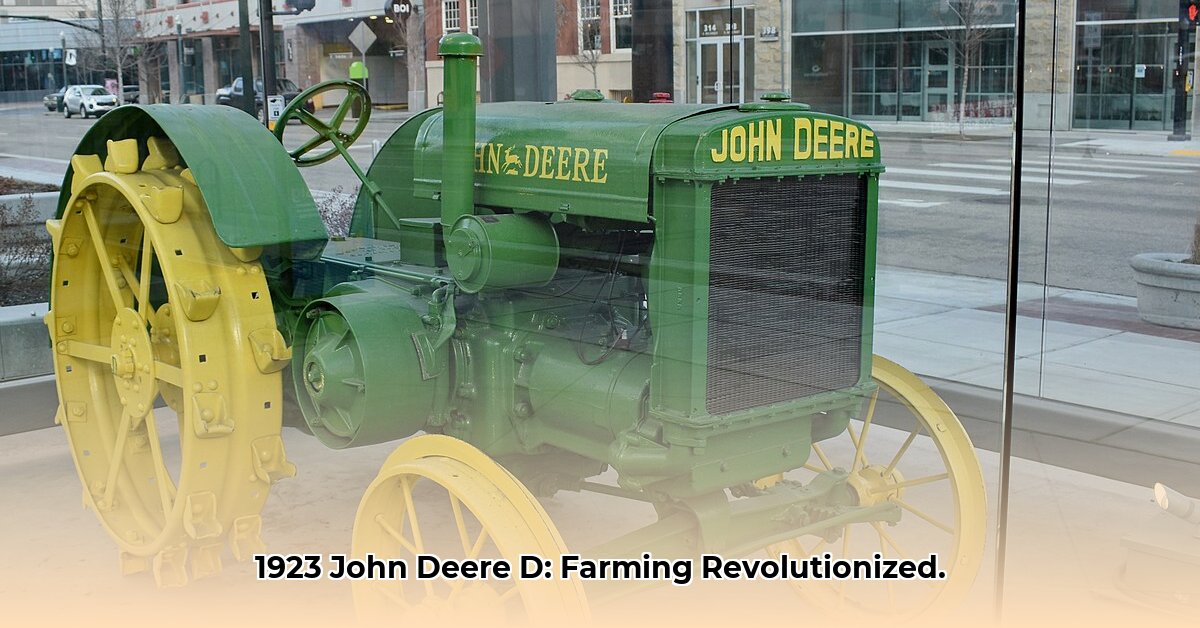
The Dawn of a Mechanical Era: The 1923 John Deere Model D
Imagine the relentless toil of 1923 agriculture: farmers, their backs bent under the weight of manual labor, reliant on the unpredictable power of horses. Then, a revolution arrived on the fields of America: the John Deere Model D tractor. This wasn't just a machine; it was a symbol of progress, a mechanical marvel that forever altered the farming landscape. Its sturdy build and, for the time, remarkably affordable price made it accessible to a broader range of farmers than ever before. This accessibility translated into less backbreaking work, increased efficiency, and significantly larger harvests. Isn't it fascinating how one machine could reshape an entire industry? For more on John Deere tractors, see this resource.
The Birth of a Legend: Innovation on the Farm
The 1923 John Deere Model D was a groundbreaking piece of engineering. While its two-cylinder engine might seem modest by today's standards, it delivered impressive power for its time, effortlessly plowing fields and pulling heavy equipment. Its initial two-speed (later upgraded to three-speed) transmission represented a massive leap forward from horse-drawn implements, offering greater control and flexibility. Equipped initially with durable steel wheels, it later offered rubber tire options, significantly enhancing traction and the operator's comfort. But the Model D's true genius lay in its versatility. It wasn't just a plow; it was an adaptable workhorse, ready for a multitude of farming tasks. How many tractors of the era could boast such versatility?
Adapting to the Times: Evolution of a Classic
The story of the Model D isn't just about its initial design; it's about its continuous evolution. From 1923 to 1953, significant improvements enhanced the tractor’s capabilities. Engine power steadily increased, enabling it to handle heavier loads. Transmissions were refined to ensure smoother and more efficient operation. The addition of optional features like the power take-off (PTO) – a shaft that transfers power to other implements – expanded its capabilities even further. The ability to run on alternative fuels such as kerosene proved invaluable during periods of fluctuating gasoline prices, highlighting the Model D’s remarkable adaptability. This constant refinement is a testament to John Deere's commitment to meeting the ever-evolving needs of farmers. What were the key factors behind its three-decade lifespan?
A Transformative Impact: Reshaping Farming Practices
The Model D's impact on farming was nothing short of revolutionary. Farmers could cultivate far larger areas in drastically less time, leading to substantial increases in yields and profitability. The arduous manual labor was significantly lessened, allowing farmers to accomplish more each day. This didn't just benefit individual farmers; the heightened efficiency rippled outwards, reshaping the economic fabric of rural America. The Model D’s influence went beyond the farm itself, impacting the lives and livelihoods of countless people. Did you know that the increase in efficiency directly impacted rural economies?
Variations for Every Need: Catering to Diverse Farming Styles
Recognizing the wide-ranging needs of farmers, John Deere introduced specialized Model D variations. The DO orchard model, with its narrower design, was perfect for navigating fruit tree rows. Other variants featured tracks instead of wheels, providing superior traction in difficult terrain. Beyond these factory variations, many farmers adapted and customized their Model D tractors, further highlighting the machine’s inherent adaptability. This customizability contributed significantly to the tractor’s extensive production run and enduring appeal. What other examples of agricultural equipment provided such a level of customization?
An Enduring Legacy: A Timeless Symbol of Progress
Though production ceased in 1953, the Model D’s legacy persists. It serves as both a symbol of agricultural progress and a powerful illustration of human ingenuity. Today, meticulously restored Model D tractors are highly prized collector’s items, commanding significant value. Museums proudly display them, paying tribute to their crucial role in shaping the history of farming. The enduring popularity of the Model D is a testament to its lasting impact – a machine that truly earned its place in history. Why do you think the Model D continues to fascinate collectors even today? The answer lies in its unique blend of functionality and historical significance.
Model D Specifications: A Chronicle of Evolution
| Feature | 1923 Model | 1930s Enhancements | 1940s Improvements |
|---|---|---|---|
| Engine | 2-cylinder, ~20 hp | 2-cylinder, 25-30 hp (approx.) | 2-cylinder, 30+ hp (approx.) |
| Transmission | 2-speed | 3-speed | 3-speed |
| Wheels | Steel | Steel/Rubber Options | Primarily Rubber |
| Optional Features | None | Power Take-Off (PTO) | PTO, Improved Lighting |
The 1923 John Deere Model D tractor stands as more than just a machine; it embodies a pivotal moment in agricultural history, a symbol of progress, and a lasting tribute to human ingenuity. Its story is a captivating reminder of how technological innovation can radically transform farming practices and the lives of the farmers who rely on them.